The Frankenhouse Problem: Why Higher Education Needs More Than a Renovation
May 04, 2026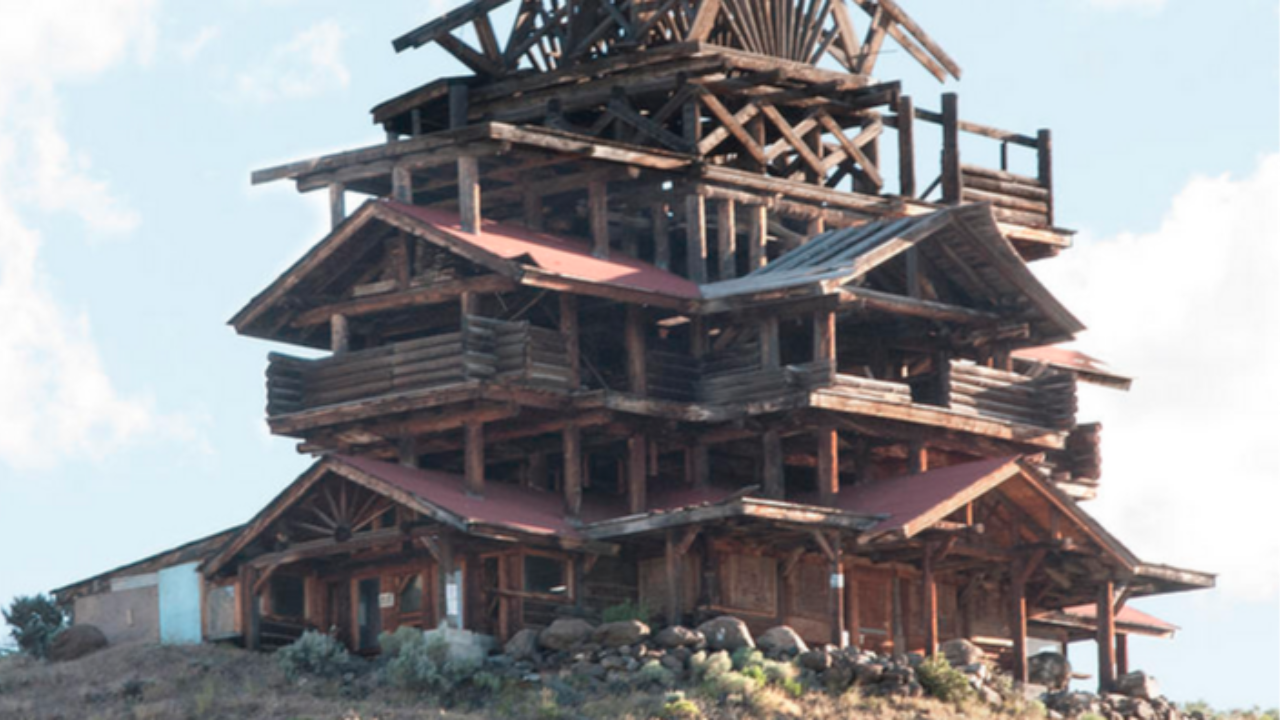
I have spent the better part of two decades trying to do strategy work inside institutions that were not built to receive it. I learned to write the plans, map the processes, build the infrastructure, and make the case. What I could not do, and it took me longer than I would like to admit to understand why, was change what happened at the top. The governance structures, the leadership defaults, the absence of operational accountability in the rooms where decisions actually got made. I kept arriving at the same ceiling.
This series started as an attempt to describe what I kept running into. My earlier series on strategy argue that strategy and planning are different things, that sequence matters, and that most institutions collapse both into a process designed to produce consensus rather than decisions. Those arguments stand. What this piece does is go one level deeper, into the structural conditions that produce that ceiling, and what it would actually take to remove it. Before we have strategy, we have to produce an honest vision.
I have spent my career in higher education as a bit of a fixer. Not a reformer, not formally anyways. Reformers have platforms and committees and strategic plans. Fixers have workarounds. You learn early that the official process is rarely the one that gets things done, that the org chart describes authority but not how decisions actually move, and that if you want something to work, you build the informal infrastructure yourself and don't make too much noise about it.
Higher education produces a lot of fixers. That is feature, not a bug. It is an institution that is structurally resistant to change: distributed governance, entrenched interests, planning cycles that outlast the problems they were designed to solve...and so the people who care about outcomes learn to operate in the margins.
You patch what you can. You work around what you can't. You move on.
That approach has a shelf life. There is a point at which the architecture itself becomes the problem, and the fixer's instinct to patch it, work around it, make it functional enough becomes a liability. I think higher education has reached exactly that point. It is abundantly clear that Higher Ed is in a rough place on multiple fronts. What it needs are builders willing to deliver the hard truth that no amount of fixing will get it out of this one, but the institution has spent decades selecting for fixers, and fixers are who it's got.
How We Got Here
Higher education did not arrive at its current state through a single bad decision. It got here through decades of accumulation with each addition made sense at the time, each new layer added in response to a real pressure or opportunity. Research universities became economic development engines. Community colleges became workforce pipelines. Institutions of all sizes became student services operations, mental health providers, housing authorities, and brand managers. Every function was bolted on without removing anything.
The result is what I think of as a frankenhouse: an institution that has been renovated so many times, by so many different hands, in response to so many different demands, that it no longer has a coherent structure. It has rooms that connect to nothing. Systems that were never designed to work together and don't.
The political and fiscal crisis bearing down on higher education did not create the structural rot but rather, it exposed it. Institutions that had been surviving on federal research dollars, enrollment growth, and deferred reckoning are now confronting all three simultaneously. The funding assumptions that underwrote the frankenhouse are no longer reliable. The student population that filled it is contracting. And the political machinery that once insulated higher education from serious scrutiny has largely evaporated.
The Denial Problem
What concerns me as much as the structural problems is the response to them.
Higher education is, at the moment, largely paralyzed. Institutions are cycling through familiar crisis behaviors: waiting to see what happens, forming task forces, issuing statements of concern or assurance of rosy futures, cutting the most visible line items while protecting the structures that generated the problem. Some are openly denying the severity of what they are facing. Others acknowledge the crisis abstractly while continuing to operate under business as usual constructs or as though incremental adjustment is sufficient
It is not.
Paralysis in the face of genuine threat is understandable. These are complex institutions with shared governance structures, long planning horizons, and deeply entrenched interests. Change is slow by design. But there is a difference between structural caution and collective avoidance, and a lot of what I am observing right now is the latter.
The conversation higher education needs to be having - about what it is actually for, who it is actually serving, and whether its current form can deliver on either is not happening at the scale or with the honesty it requires.
The Renovation Trap
When institutions do move toward change, they tend toward renovation that tinkers at the margin: restructuring a college here, consolidating programs there, launching a new strategic planning process. These are not wrong impulses, but they are insufficient responses to a structural problem.
Renovation works when the foundation is sound. You can update the kitchen if the house is worth keeping. But if the foundation has collapsed, if the floor plan no longer serves the people living in it, renovation is expensive, disruptive, and ultimately the wrong move. Sometimes you have to clear the site and build something new.
The question higher education should be asking is not "how do we fix what we have" but "what would we build if we were building from scratch, for the people we are actually trying to serve, with the resources we actually have."
That is an infinitely harder question to tackle. It requires letting go of things that have institutional identity attached to them. It requires admitting that some of what we have built does not work and is not worth preserving. Most institutions are not ready to ask it.
What Building from Scratch Actually Means
I want to be precise about what bulldozing the site and starting over means, because the metaphor can obscure more than it clarifies.
I am not arguing for privatization, or for abandoning the public mission of higher education, or for treating universities like startups. I am arguing for a willingness to question first principles: to ask what this institution is for before asking how to fix it.
At the institutional level, that means governance structures that can actually make decisions, mission statements that constrain rather than infinitely expand, and a willingness to exit functions the institution is not equipped to perform well. It means asking which of the additions made over the last 40 years belong in a university and which belong somewhere else entirely. It means accepting that a smaller, more coherent institution may serve its people better than a larger, more comprehensive one. It means forging its own identity and running away from sameness with other institutions.
That is not a renovation. That is a different institution entirely.
What's Next?
Most of us in higher education do not have a fully formed answer to what the rebuilt version looks like. That is honest, and anyone who tells you otherwise is selling something. The current moment, for all its chaos and damage is forcing a question that higher education has avoided for decades: not what are we trying to preserve, but what are we trying to build?
A French political commentator I watched recently put it simply: what's next? Not as a rhetorical gesture. As a demand.
The old world is not returning. The damage is real and the timeline for recovery, under any political configuration, is long. What higher education does with that reality depends almost entirely on the quality of its leadership.
Fixer culture is not a personality quirk. It is what institutions produce when no one is required to account for what they are actually building or why. When the operational reality of an institution; what it costs, what it produces, who it serves and how well, is never made visible in the rooms where decisions get made, leaders at every level learn to manage what exists rather than challenge it. That is rational. It is also, at scale, how an institution loses the capacity to do anything other than survive.
What higher education is short on is not effort or intelligence or even willingness to change. It is leaders willing to look clearly at what the operation actually produces before deciding what to build next. Vision that isn't grounded in that accounting isn't vision. It is the next renovation perhaps better intentioned than the last one, but just as likely to add another room the house doesn't need.
That is the work. Not another strategic plan. An honest operational reckoning with what the institution has, what it costs, and what it is actually delivering before anyone picks up a hammer.
